


Hundreds, tens, ones are such fun!
- Mrs Desmond
- Feb 22, 2017
- 3 min read
When I think about place value, I immediately remember the MAB blocks used in early primary years with the small cubes representing the ones, the long rods the tens and the squares the hundreds. Place value is the base of all work in number. In our decimal system the value of a digit depends on where it is placed in the number. The term base of 10 is the same as a collection of 10. The value of the digit is determined by what position the digit held. Our number system is based of the Hindu-Arabic number system which allows any number to be represented using 10 digits. If another number system was adopted and it required a different symbol for every number, a person’s working and short term memory would quickly run out. It is important students do not view 10 as just the number in between 9 and 11 and recognise its value.
Place value develops from various experiences including counting and mental computations. It is important students acquire a thorough understanding of place value to allow them to grasp computation tasks such as addition, subtraction, division and multiplication.
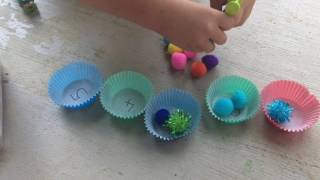
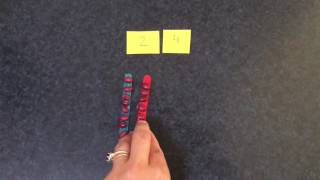
Hands on manipulatives are essential to establishing and developing concepts of place value. A successful method for teaching place value is by modelling the process or ungrouped and pregrouped manipulatives. The pregrouped materials are formed before a child sees them. Manipulatives and concrete experiences help develop the concept of place value. A few examples include using 10c pieces to make 100c ($1) or use paddle pop sticks and beans. Students can count out 10 beans to make group of 10. The beans are than glued onto a paddle pop stick to show 1 ‘ten’. Counters, buttons and base ten blocks are also useful. Students use small quantities and bundling or trading with 1-to-1 representations. A base10 placemat is useful in the earlier years. Children benefit from teachers modelling the process from an ungrouped pile to groups of ten, to bean sticks to the number represented as symbols. Once students have had plenty of experience counting the objects, trading tens and hundreds and able to discuss their processes.
A game to play with children to further develop place value understanding is a trading game. Students swap, add and subtract their beans and bean sticks to create desired numbers. It is important to see numbers in multiple ways. Children with good number sense show and recognise a number in multiple ways. Children can explore the number with manipulatives to see how many ways they can show 36. It is 36 single beans. It is 3 bean sticks and 6 single beans. 2 bean sticks and 16 single beans. 6 groups of 6 bean sticks. Students can begin substituting the language. Single beans become ones and bean sticks become tens.
There are a few common errors relating to place value. These include confusion in counting numbers teen numbers as there is a lack of pattern in the name and also making transitions, for example, 28, 29, ….20-10 (should be 30). Students often reverse digits as do not recognise the difference between 23 and 32. Simple place value errors are the cause of many later computation errors.
Check out my video for a fun way to use manipulatives to develop further understanding of place value
Comments